Preloader Close
Increase Energy Savings with Reflective Insulation Bubble Sheets

Send us Email
Blog Details
How Reflective Insulation Improves Warehouse Temperature Control and Energy Efficiency
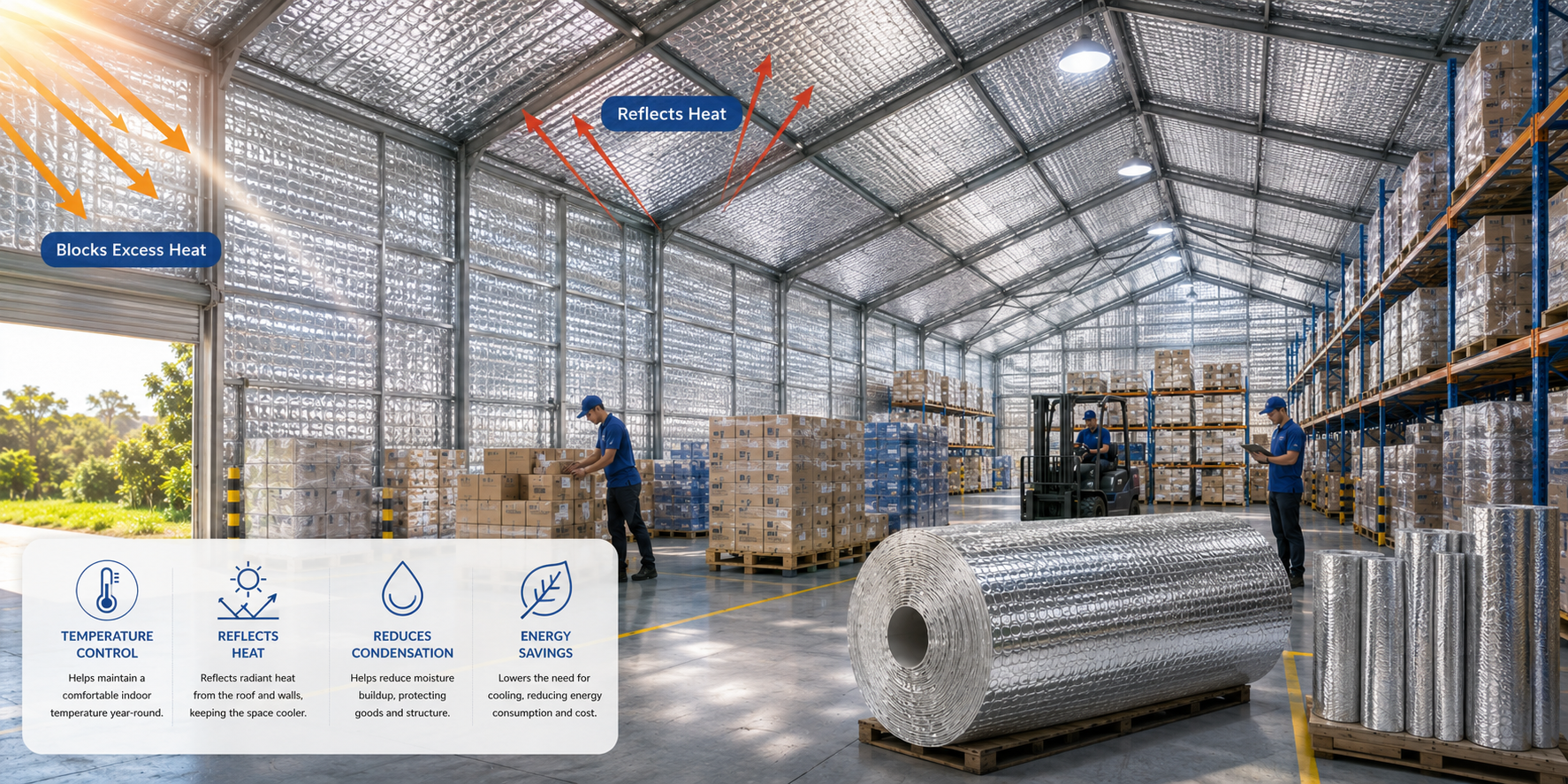
Warehouses are the backbone of modern supply chains, storing everything from raw materials and machinery to finished goods and temperature-sensitive products. However, one common challenge faced by warehouse owners is excessive heat buildup inside large metal structures.
During summer, warehouse roofs absorb intense solar radiation, causing indoor temperatures to rise significantly. This creates an uncomfortable working environment, increases cooling costs, and can negatively impact stored inventory.
Reflective insulation is one of the most effective solutions for controlling warehouse temperatures while improving overall energy efficiency.
Why Do Warehouses Get So Hot?
- Most warehouses are constructed using metal roofing and wall cladding. While metal is durable and cost-effective, it is also an excellent conductor of heat.
-
When sunlight strikes the roof:
- Solar radiation is absorbed by the metal surface.
- Heat transfers into the building.
- Indoor temperatures rise rapidly.
- Cooling systems work harder.
- Energy bills increase.
- Large warehouse spaces can become heat traps, especially during peak summer months.
What Is Reflective Insulation?
- Reflective insulation consists of highly reflective aluminum foil surfaces combined with air bubble or foam layers.
- Instead of absorbing heat, the reflective surface redirects radiant heat away from the building.
-
This helps:
- Reduce heat gain through the roof.
- Maintain more stable indoor temperatures.
- Improve occupant comfort.
- Reduce dependence on air-conditioning systems.
How Does Reflective Insulation Work in Warehouses?
- Reflective insulation works by addressing radiant heat transfer, which is responsible for a significant portion of heat entering industrial buildings.
-
When sunlight hits the warehouse roof:
- Solar radiation reaches the roof surface.
- Reflective insulation reflects most of this radiant energy.
- Less heat enters the warehouse.
- Indoor temperatures remain lower.
- Cooling equipment consumes less electricity.
- This process improves overall thermal performance without requiring major structural modifications.
Benefits of Reflective Insulation for Warehouses
- 1. Reduces Excess Heat Gain
- Reflective insulation helps prevent warehouses from becoming excessively hot during summer by reflecting radiant heat before it enters the building.
- 2. Lowers Energy Costs
- By reducing indoor temperatures, cooling systems operate more efficiently and consume less electricity.
- 3. Improves Worker Comfort
- Excessive heat can affect employee productivity, safety, and overall comfort.
- 4. Protects Stored Inventory
-
Many products can be affected by high temperatures, including:
- Electronics
- Packaging Materials
- Chemicals
- Food Products
- Pharmaceuticals
- 5. Reduces Condensation
- Reflective insulation helps reduce moisture buildup, protecting inventory and structural components from damage.
- 6. Supports Sustainable Building Goals
- Lower energy consumption means reduced carbon emissions and improved environmental performance.
Is Reflective Insulation Only Useful During Summer?
- During Summer
- Reflective surfaces block a significant amount of radiant heat from entering the warehouse, helping maintain cooler indoor temperatures and reducing cooling costs.
- During Winter
- The insulation helps reduce heat loss from inside the building, improving energy efficiency during colder months.
Where Can Reflective Insulation Be Installed in a Warehouse?
-
Reflective insulation can be installed in:
- Metal Roofs
- PEB Structures
- Side Walls
- Industrial Sheds
- Logistics Facilities
- Distribution Centers
- Manufacturing Warehouses
- Cold Storage Support Structures
Frequently Asked Questions
- Does reflective insulation reduce warehouse temperature?
- Yes. Reflective insulation reduces radiant heat transfer, helping warehouses remain significantly cooler during hot weather.
- Can reflective insulation reduce electricity bills?
- Yes. By lowering indoor temperatures, cooling systems operate more efficiently and consume less energy.
- Does reflective insulation prevent condensation?
- Yes. It helps reduce moisture formation on metal surfaces and minimizes condensation-related issues.
- Is reflective insulation suitable for metal warehouses?
- Absolutely. Reflective insulation is specifically effective for metal-roofed and steel-framed warehouse structures.
- Can reflective insulation be installed in existing warehouses?
- Yes. Reflective insulation can be added to both new and existing warehouse buildings.
Conclusion
- Warehouses face constant challenges related to heat gain, energy consumption, worker comfort, and inventory protection. Reflective insulation provides a practical and cost-effective solution by reducing radiant heat transfer, lowering cooling costs, minimizing condensation, and improving overall building performance.
- Whether you operate a logistics center, industrial shed, manufacturing facility, or storage warehouse, reflective insulation can help create a more energy-efficient and comfortable environment year-round.