Preloader Close
BUBBLE THERMAL INSULATION WRAP

Send us Email
Blog Details
Why Air Bubble Insulation Is the Future of Energy-Efficient and Sustainable Construction
The building world is changing fast, and energy efficiency and sustainability are leading the way in terms of innovation. Builders, architects, and homeowners alike are looking for insulation products that not only offer good performance but also follow green building principles. Of the numerous options today, air bubble insulation is emerging as a new, affordable, and sustainable choice.
This post will delve into what sets air bubble insulation apart, how it cuts down on energy consumption, and why it is set to be the future of green building.
What Is Air Bubble Insulation?
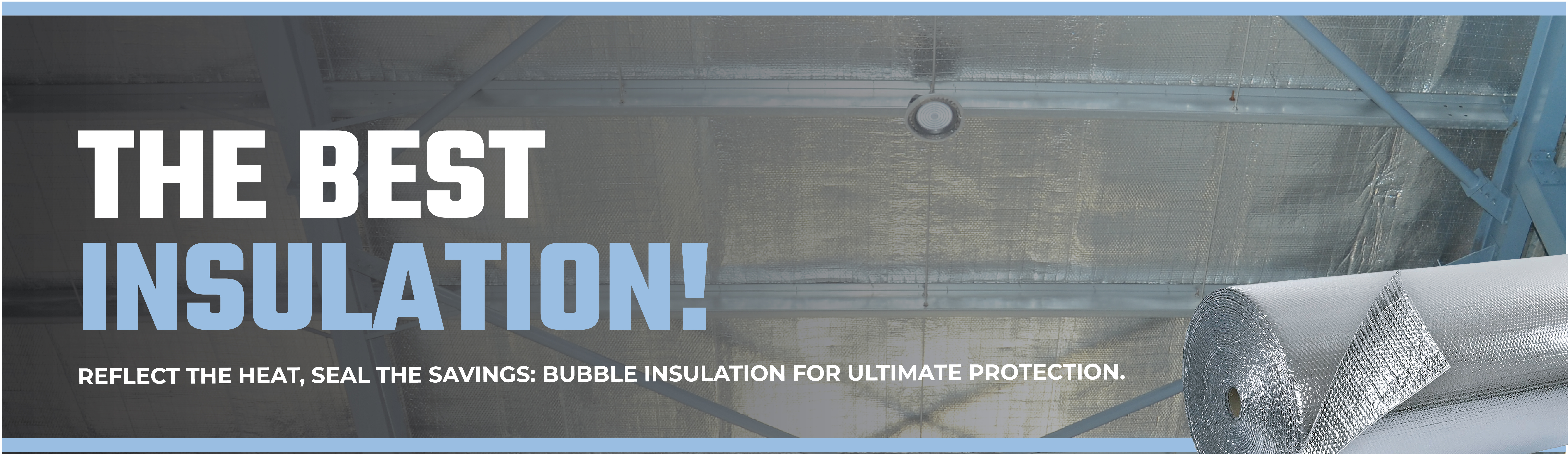
Air bubble insulation is a multi-layered thermal insulation that couples air-filled polyethylene bubbles with reflective aluminum foil surfaces. The bubble layer produces trapped air pockets that reduce conductive heat transfer, and the reflective foil reflects radiant heat.
This two-stage mechanism makes air bubble insulation efficient in various climates, either keeping interiors cooler during summer or warmer during winter. It is also light, strong, and multi-purpose — ideal for both domestic and industrial use.
The Process of Air Bubble Insulation
The mechanism of air bubble insulation is straightforward yet highly effective:
1. Radiant Heat Reflection – The aluminum foil surface reflects as much as 97% of radiant heat away from the building envelope.
2. Thermal Resistance – The bubble layer reduces conductive heat transfer, providing an effective barrier.
3. Moisture Protection – In contrast to fiberglass or wool insulation, air bubble insulation is resistant to condensation, mold, and mildew.
This three-way approach provides improved indoor comfort, lower HVAC load, and less energy consumption.

Key Advantages of Air Bubble Insulation
1. Energy Efficiency and Cost Savings
By reflecting radiant heat and minimizing thermal transfer, air bubble insulation maintains indoor areas at consistent temperatures. This lessens the burden on heating and cooling equipment, resulting in significant energy savings over the long term.
2. Lightweight and Easy to Install
Air bubble insulation is simple to ship, cut, and install. Its flexibility also makes it a DIY favorite as well as a go-to material for large-scale projects.
3. Moisture and Vapor Resistance
The closed-cell structure acts as a vapor barrier, preventing condensation and maintaining better indoor air quality.
4. Versatility Across Applications
From residential attics and walls to warehouses, ducts, and agricultural structures, air bubble insulation adapts to multiple environments.
5. Long Lifespan and Durability
Properly installed, this insulation can last for decades, maintaining its thermal efficiency and reflective properties with minimal maintenance.
Applications of Air Bubble Insulation
Residential Construction
• Attics, ceilings, and crawl spaces
• Roofs in tropical areas for heat resistance
• Basements and exterior walls for moisture control
Commercial and Industrial Applications
• Factories and warehouses
• Metal buildings with extreme heat exposure
• HVAC duct insulation
Agricultural Applications
• Greenhouses to maintain temperature
• Animal shelters for comfort
• Storage facilities to guard against crops and equipment
Air Bubble Insulation versus Traditional Insulation
Traditional insulation products such as fiberglass, mineral wool, and foam boards are mainly conductive heat transfer reducers. As efficient as they are, they do not capture radiant heat well and compromise in humid environments.
Air bubble insulation integrates the reflective and the thermal resistance into a single solution. It is also more resistant to moisture and less difficult to install, giving it an upper hand for todays advanced, sustainable projects.
Environmental Benefits of Air Bubble Insulation
Among the strongest points of air bubble insulation is its environmental benefit.
Lower Carbon Footprint – By reducing energy consumption, it lowers greenhouse gas emissions.
Light Transport – Its light weight and compact size lower fuel usage during transport.
Recyclability – Most types of air bubble insulation are recyclable, which is in line with circular economy principles.
Green Building Credits – Contractors can obtain LEED or BREEAM certification points by utilizing this insulation.
In a world heading towards net-zero buildings, air bubble insulation is an important part of sustainable building techniques.
Installation Hints for Optimum Efficiency
In order to achieve optimum results from air bubble insulation, observe the following practices:
Measure Accurately – Fit the insulation into the space without leaving gaps.
Leave Air Gaps – Reserve space on one side for reflective surfaces to function properly.
Seal Joints Properly – Seal seams using foil tape to avoid thermal leaks.
Avoid Compression – Never press down on the bubble layer, as it decreases insulation effectiveness.
Frequently Asked Questions (FAQ)
1. How long does air bubble insulation last?
With proper installation, it can last decades while retaining thermal performance.
2. Can air bubble insulation be used in cold climates?
Yes, it keeps the home warm indoors in winter and off heat in summer.
3. Is it safe to use in homes?
Yes, air bubble insulation is non-toxic, resistant to moisture, and easy to manipulate.
4. Can it be installed by myself?
Yes, its flexible and lightweight construction makes it easy to install DIY.
5. Does air bubble insulation promote sustainability?
Yes — it lessens energy usage, reduces carbon footprint, and is generally recyclable.
Conclusion
The future of building is sustainable, energy efficient, and green — and air bubble insulation is the driving force. Its exceptional potential to reflect radiant heat, withstand moisture, and endure in the long term makes it an exceptional selection for residential, commercial, and agricultural use.
In using air bubble insulation, builders and homeowners not only save money, but also help create a greener, more sustainable world.